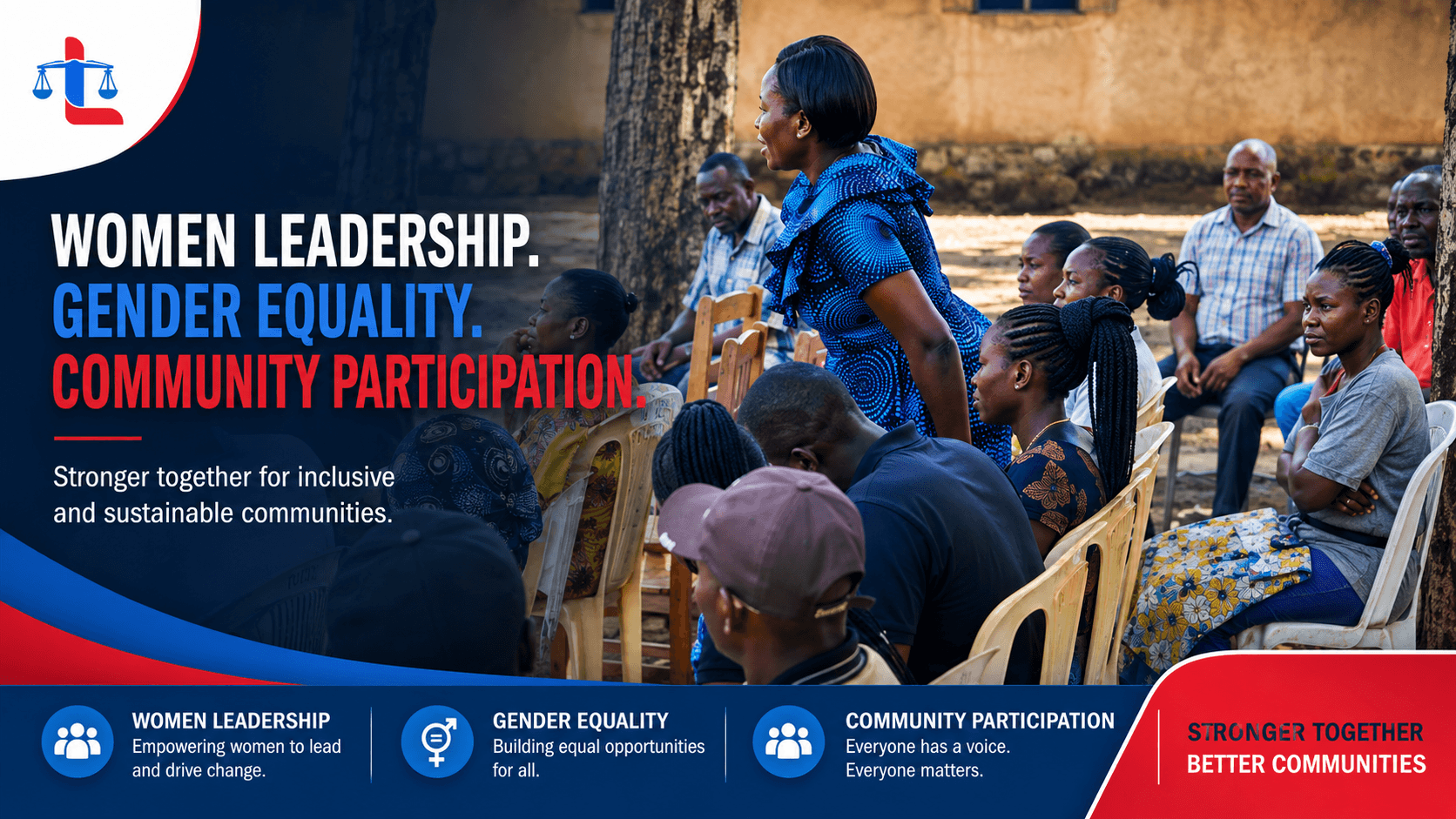
Women in Community Leadership: Barriers and Pathways
Women in Community Leadership: Barriers and Pathways
Women in community leadership hold up much of Kenya’s local development. They chair self-help groups, run table banking schemes, organise water committees and mobilise turnout for clinics. Yet when formal decisions get made about budgets and projects, the same women are often absent from the room.
The gap is not about capability. It is about specific, identifiable barriers, and most of them can be addressed.
Where women already lead
It is worth starting with what exists, because the picture is often described too negatively.
Across Kenyan communities, women run the majority of savings groups and merry-go-rounds. They dominate school parent committees. Furthermore, they organise much of the labour and logistics behind community projects, from borehole maintenance to health outreach days.
This is leadership. It involves managing money, resolving disputes, coordinating people and sustaining institutions over years. The skills transfer directly to county-level participation.
The problem is not that women lack leadership experience. It is that the experience rarely converts into influence over public resources.
The barriers that actually bite
Four obstacles come up repeatedly.
Time. Household and care responsibilities fall disproportionately on women. A budget forum held at eleven in the morning, two hours from home, is not neutral in its effect. It excludes the people with the least flexible days.
Information. Notices circulate through channels women may not access equally, including certain social settings and messaging groups. As a result, many hear about a forum after it has happened.
Confidence and precedent. Where public speaking at community meetings has historically been done by men, speaking up carries a social cost. Younger women face this most sharply.
Money. Transport to a county headquarters, airtime to follow up, and a day away from a market stall all cost something. These amounts are small in absolute terms and decisive in practice.
None of these barriers require changing anyone’s mind about whether women should lead. They require changing logistics.
Practical changes that open the door
Communities and organisations can address most of the above directly.
Fix the timing. Hold forums when women can attend. Ask, rather than assuming. Early morning or late afternoon often works better than mid-day.
Bring the meeting closer. Ward-level and village-level sessions reach far more women than county headquarters events.
Use multiple notice channels. Announce through churches, mosques, markets, chief’s barazas, women’s groups and school networks — not one channel alone.
Budget for transport. Where an organisation convenes a forum, a small transport allowance changes who shows up.
Create speaking pathways. Small group discussions before plenary sessions let people rehearse a point. Written submissions give an alternative to public speaking.
Pair newcomers with experienced participants. Attending your first county forum alongside someone who has done it before removes most of the intimidation.
What communities gain
Broader participation is not only fairer. It produces different decisions.
Women’s daily responsibilities give them direct knowledge of services that budget documents treat abstractly. Water access, clinic staffing, school feeding, market conditions and road safety near schools all look different from that vantage point.
When those perspectives enter budget discussions, priorities shift. Moreover, projects designed with the eventual users in the room tend to be maintained better afterwards.
There is also a durability effect. Groups with mixed participation sustain engagement longer, because responsibility spreads across more people.
Supporting women who step forward
Stepping into a public role invites scrutiny, and sometimes hostility. Support matters.
Communities can help by backing women who take on visible roles rather than leaving them exposed. Organisations can help through mentorship, training and simply ensuring a woman raising an issue is not doing it alone.
In addition, documentation protects. A woman who raises a difficult accountability question is safer with a written record, a group behind her and an organisation aware of the situation.
Our commitment
Limitless Talk Organization is women-led and youth-led, and this shapes our practice rather than sitting in our description. We schedule sessions around participants’ availability. We run smaller, local forums instead of large centralised ones. Furthermore, we follow up individually with participants preparing to attend county meetings for the first time.
Our aim is not to create leaders from nothing. It is to connect women who already lead in their communities to the decisions that affect them.
Where to begin
If you already chair a group, manage a savings scheme or organise community activities, you have the relevant experience. The next step is applying it one level up.
Find out when your ward holds its next public forum. Read whatever document it concerns. Bring two other women with you. Prepare one clear point between you.
Women in community leadership change outcomes when they are present at the moment decisions get made. Getting there starts with a single date in the diary.