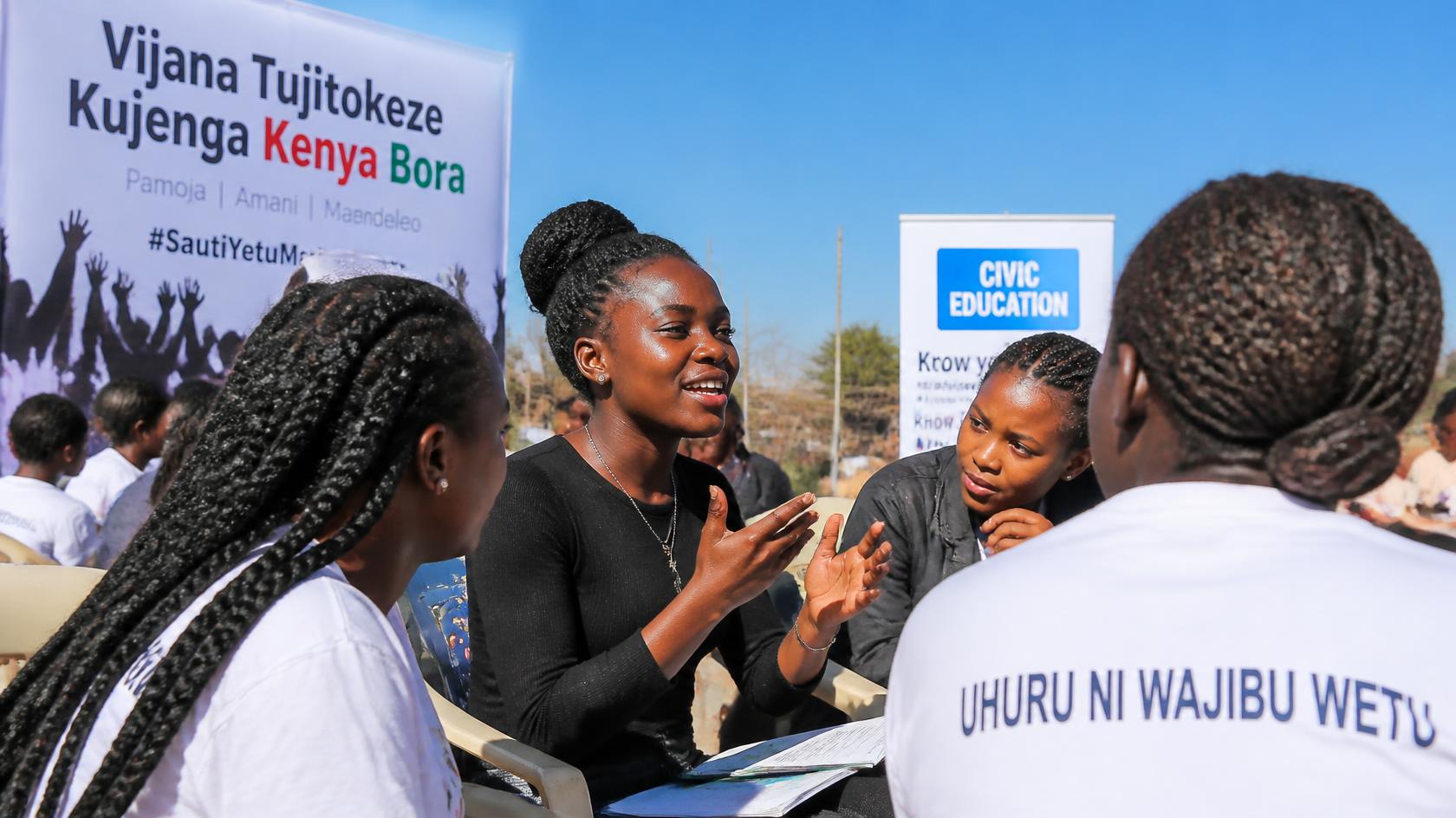
Civic Education in Kenya: Why Youth Need It Now
Civic Education in Kenya: Why Youth Need It Now
Civic education in Kenya is often treated as something that happens before an election and stops afterwards. That timing is exactly backwards. Young people make up the largest share of the population, yet many leave school without knowing how a county budget works or who to call when a project stalls.

This post explains what civic education really covers, why it matters most for young people, and how to begin.
More than knowing who to vote for
Ask most people what civic education means and they will mention elections. Elections are part of it. However, the subject is far broader.
Civic education covers how power is distributed, how public money moves, and how ordinary citizens can influence both. It includes practical knowledge:
- Which services your county handles, and which the national government handles
- How to request public information and what to do when a request is refused
- Where county budget decisions get made, and when the public can comment
- How to report a stalled project, and to whom
- What your rights are during an arrest, an eviction or a public gathering
None of this appears automatically. Somebody has to teach it, and most young Kenyans never receive it.
Why the gap hurts young people most
Young people carry the sharpest edge of most public failures. Unemployment, poor road access to markets, understaffed clinics and thin bursary allocations all land hardest on those starting out.
Meanwhile, the same group is least represented in the rooms where budgets get decided. Ward forums often fill with older residents. Young people either do not hear about them or assume their presence will not matter.
The result is a cycle. Because youth do not attend, budget priorities skew away from youth concerns. Because priorities skew, young people conclude that participation is pointless. Consequently, attendance falls further.
Civic education breaks that cycle at the weakest point. When a young person learns that a bursary allocation is debated in a specific meeting on a specific date, attendance stops being abstract.
What changes when young people know the system
We see three shifts consistently in our work.
Questions get sharper. Before training, complaints sound like “the county has done nothing.” Afterwards, they sound like “the ward allocation for this financial year listed a borehole, and the money was released in March. Where is it?” Officials answer the second question differently.
Participation becomes routine. Trained participants return to forums year after year. In addition, they bring friends, which multiplies the effect without any further training.
Leadership emerges locally. Some participants go on to serve on school boards, water committees or community groups. Others contest ward-level positions. Civic knowledge lowers the barrier to stepping forward.
Where to start if you are young and interested
You do not need a programme to begin. Start with these steps.
Learn your ward. Find out its name, its representative, and roughly what it receives in the county budget. This single fact changes how you read news about your county.
Read one document. Your county publishes an annual budget and a development plan. Download one. Skip to the section covering your ward or a sector you care about.
Attend one forum. Sit at the back if you prefer. Listen to how the discussion runs. Notice who speaks and who does not.
Ask one question in writing. Use the Access to Information Act to request something specific — the cost of a project, or the status of an allocation.
Join others. Groups sustain momentum in a way individuals rarely can. Community organisations, student associations and youth groups all offer entry points.
Civic education is not neutral, and that is fine
Some people worry that civic education pushes a political agenda. It is worth being clear about this.
Good civic education does not tell you which party to support or which leader to trust. Instead, it gives you the tools to judge for yourself. It teaches you to check a claim against a budget line, to ask what happened to a commitment, and to distinguish between a promise and an allocation.
That does have a bias, in one sense. It favours informed citizens over uninformed ones. Furthermore, it favours transparency over secrecy. Those are values worth defending openly.
Our approach at Limitless Talk
Limitless Talk Organization is youth-led and women-led, which shapes how we run sessions. We work in plain language rather than technical jargon. We use real county documents rather than hypothetical examples. Moreover, we follow up after training, because a single workshop rarely changes behaviour on its own.
Our sessions cover devolution, public finance basics, access to information and practical participation skills. Participants leave with something concrete: a date to attend, a document to read, or a submission to draft.
Take the first step
Civic education in Kenya works best when it is practical, local and repeated. One session sparks interest. Regular practice builds capability.
If you are a young person who wants to understand how decisions in your county actually get made, we would like to hear from you.
Learn more about our work or volunteer with us to help run sessions in your community.