Public Participation in Kenya: A Citizen’s Guide
Public Participation in Kenya: A Citizen’s Guide
Public participation in Kenya is not a favour that leaders grant you. It is a right written into the Constitution. Yet many citizens have never attended a single forum, and most have never been told one was happening. This guide explains what the right actually means, where the opportunities are, and how to use them.
What the law actually says
The Constitution of Kenya, adopted in 2010, lists participation of the people among the national values that bind every state officer. Devolution was designed around the same idea. When county governments were created, one of the stated purposes was to bring decision-making closer to communities.
Public finance carries the same requirement. The Constitution demands openness, accountability and public participation in how money is raised and spent. In practice, this means a county cannot lawfully pass a budget without giving residents a genuine chance to comment on it.
The word “genuine” matters here. A notice pinned to a wall on a Friday afternoon for a Monday meeting is not genuine. Neither is a forum held in a language most attendees do not speak. Courts in Kenya have struck down county laws and projects where participation was treated as a box-ticking exercise.
Where the real opportunities happen
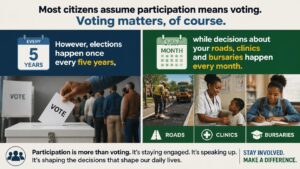
Most citizens assume participation means voting. Voting matters, of course. However, elections happen once every five years, while decisions about your roads, clinics and bursaries happen every month.
Here are the moments that actually shape your county:
- County budget forums. Every year, your county prepares spending plans and must invite public views before the assembly approves them.
- Ward-level development meetings. These decide which specific projects get funded in your area.
- County assembly public hearings. Committees invite written or spoken submissions on proposed county laws.
- Development plan consultations. Counties prepare a multi-year plan setting long-term priorities, and residents are meant to shape it.
- Public petitions. You can formally petition your county assembly or Parliament on almost any issue.
Because the calendar repeats annually, you can plan ahead. Ask your ward administrator or county assembly clerk for the schedule. Furthermore, keep a note of when your ward representative holds open days.
How to prepare so your voice lands
Turning up is a good start. Turning up prepared is far better. Officials respond differently to a resident who arrives with figures than to one who arrives with only frustration.
First, get the document. Budget papers and draft plans are public. Request them from the county office, check the county website, or ask your ward representative. The Access to Information Act gives you a legal route if they refuse.
Second, pick one issue. A submission covering fifteen complaints gets filed away. A submission about one clinic, with specifics, gets discussed.
Third, bring evidence. Photographs, dates, numbers of people affected, and the exact line item you are questioning all strengthen your case.
Fourth, write it down. Submit your points in writing as well as speaking. Written submissions create a record, and records are harder to ignore later.
Finally, go with others. Ten residents making the same point carry more weight than one. Therefore, talk to neighbours before the meeting rather than after it.
Common obstacles, and what to do about them
Participation in Kenya is a right on paper, but obstacles are real. Below are the ones communities meet most often.
You never heard about the meeting. Notices are sometimes published in newspapers few people read. As a result, attendance stays low, which officials then cite as proof of public disinterest. Ask to be added to a notification list, and follow your county assembly on social media.
The venue is far or the timing is awkward. Raise this formally. Meetings held far from the affected community, or during working hours, exclude the people most affected.
The language is technical. Budget documents are dense. However, you do not need to understand every line. Focus on the section covering your ward or your sector.
Nothing seems to change afterwards. This is the most discouraging obstacle. Ask for the report of the forum and check whether your submission was recorded. Consequently, when the same issue returns next year, you have documentation.
Participation is a habit, not an event
Communities that get results treat participation as routine. They attend the same forums every year, they know the officials by name, and they follow up in writing. Over time, officials come to expect them.
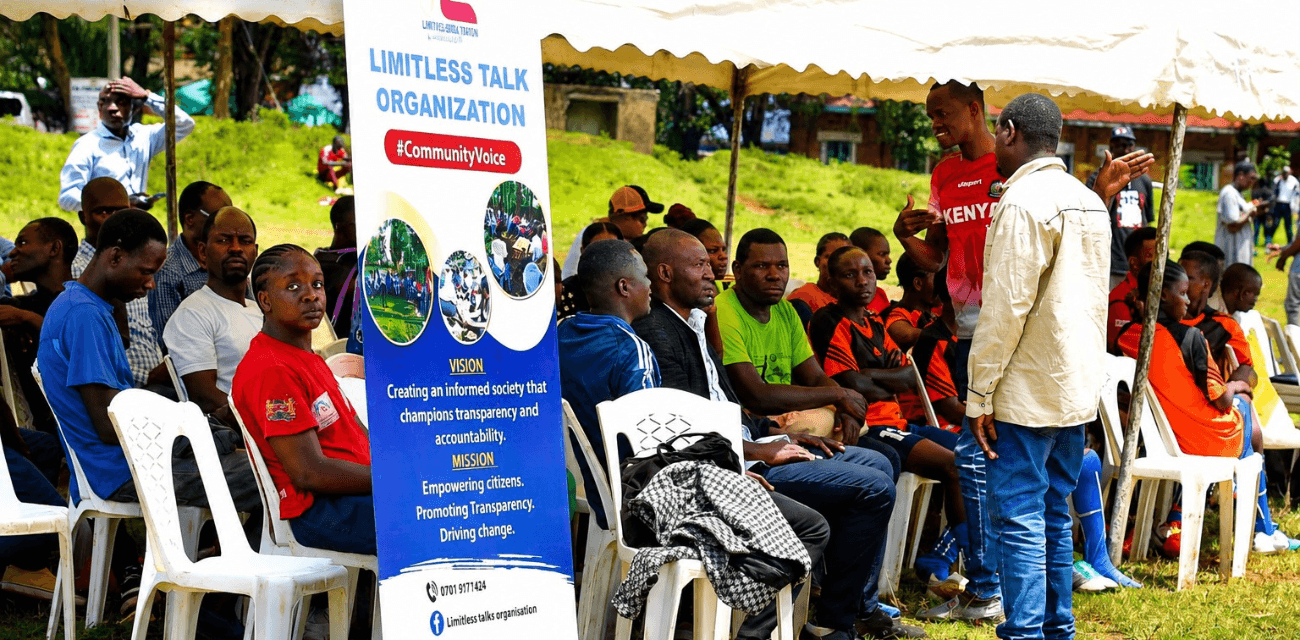
At Limitless Talk Organization, we work with young people, women and communities to build exactly this habit. Our civic education sessions break down how county decisions get made and where residents can intervene. In addition, we support community members to prepare submissions and follow up on commitments.
You do not need a law degree to take part. You need the date, the document and the willingness to show up.
Start with one meeting
Choose a single upcoming forum in your ward. Find out when it happens. Read whatever document it concerns. Prepare one clear point, write it down, and bring one neighbour with you.
That is how public participation in Kenya stops being a phrase in the Constitution and starts being something that changes your street.
Want to take part in our next civic education session? Get in touch or volunteer with us.